
Introduction
Choosing the right advertising platform can make a major difference to how much money a website earns from display ads.
For publishers who want to monetize their content, two Google products often come into the discussion: AdSense and Ad Exchange.
Although both can help publishers earn advertising revenue, they serve different types of publishers and offer different levels of control.
The question of Google AdSense vs Google Ad Exchange becomes especially important when a website starts receiving more traffic and the publisher wants to improve ad revenue without negatively affecting the user experience.
Google AdSense is generally easier to start with and is suitable for many small and medium-sized websites.
Google Ad Exchange, on the other hand, provides more advanced advertising capabilities and access to a broader marketplace of buyers, but it is usually intended for publishers with more sophisticated monetization requirements.
In this guide, we will explain the differences between these platforms, how they work, their advantages and disadvantages, revenue potential, eligibility considerations, and which option may be better for your website.
What Is Google AdSense?
Google AdSense is a popular advertising platform that allows website owners to display advertisements on their websites and earn money when users interact with those ads.
The platform is designed to make website monetization relatively simple. After a website is approved, publishers can place AdSense ad units on appropriate pages.
Google then automatically matches advertisements with the website's content and audience.
One of the main benefits of AdSense is how easy it is to set up and use. Website owners can display relevant ads without managing individual advertisers, negotiating rates, or handling complex ad operations.
Once properly configured, AdSense automatically matches ads with your content and audience, making it a convenient option for publishers who want a simple way to monetize their website.
Publishers do not need to negotiate directly with advertisers or manage a complicated advertising marketplace.
AdSense can display different types of advertisements, including:
- Display ads
- Responsive ads
- In-feed ads
- In-article ads
- Multiplex ads
- Auto ads
Google uses automated systems to determine which advertisements are appropriate for available ad spaces.
Revenue can vary depending on factors such as traffic location, niche, advertiser demand, device type, seasonality, and user behavior.
For many bloggers, content creators, tutorial websites, and informational websites, AdSense is a practical starting point for earning advertising revenue.
What Is Google Ad Exchange?
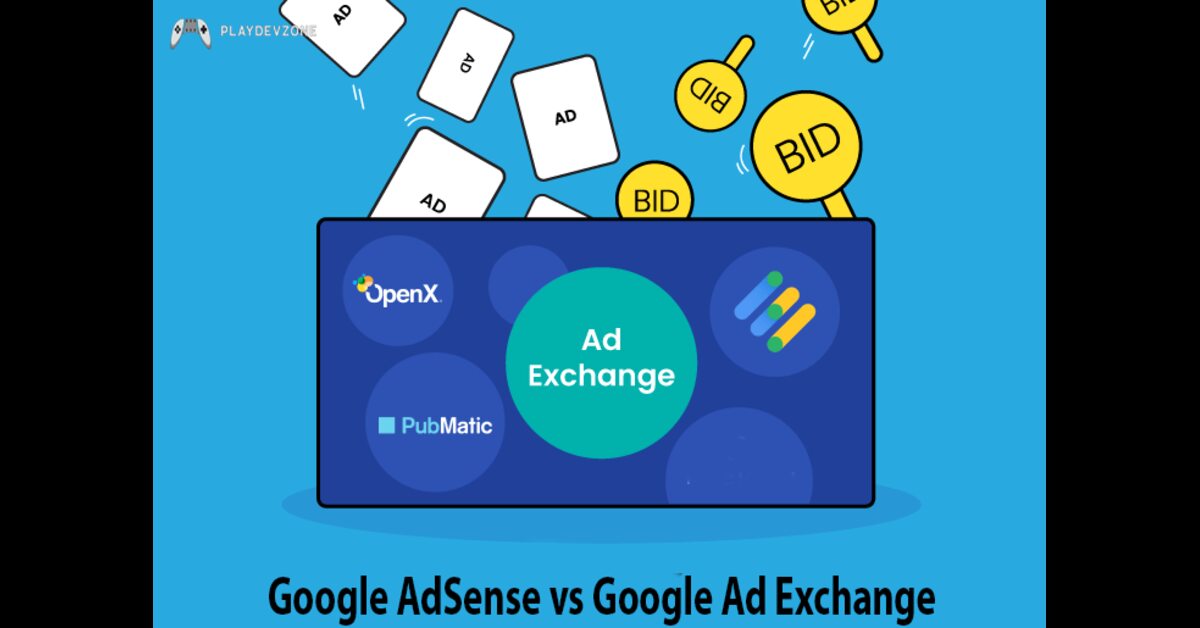
Google Ad Exchange is a more advanced advertising marketplace that connects publishers with multiple sources of advertiser demand.
Unlike a basic advertising setup, Ad Exchange can provide publishers with greater control over how advertising inventory is sold and managed.
It can support programmatic buying and allow eligible publishers to access a broader pool of buyers.
This is one reason the Google AdSense vs Google Ad Exchange discussion becomes more relevant as a website grows.
Google Ad Exchange is generally associated with publishers that have larger or more complex advertising operations.
It is commonly used through Google Ad Manager and other authorized arrangements rather than being treated simply as a beginner advertising account.
Some important capabilities associated with Ad Exchange include:
- Programmatic advertising
- Multiple sources of demand
- More advanced inventory management
- Greater control over buyers and pricing
- Advanced targeting options
- More sophisticated auction functionality
- Integration with Google Ad Manager
However, having access to advanced advertising technology does not automatically guarantee higher earnings.
Revenue depends on many factors, including traffic quality, audience geography, ad placement, viewability, content category, advertiser competition, and overall demand.

Google AdSense vs Google Ad Exchange: Key Difference
The simplest way to understand the difference is to think about the target audience.
AdSense focuses on making website monetization accessible and straightforward for publishers.
Ad Exchange focuses more heavily on advanced programmatic advertising and sophisticated inventory management.
When comparing Google AdSense vs. Google Ad Exchange, AdSense is usually easier for beginners, while Ad Exchange can be more suitable for publishers that need greater control and more demand sources.
Feature
Beginner friendly
Beginner friendly
Demand sources
Demand sources
Inventory management
Direct advertiser relationships
Programmatic capabilities
Best for
Google Ad Manager integration
Revenue guarantee
Google AdSense
Yes
Relatively simple
Standard
Primarily Google-managed demand
Basic to moderate
Limited
Available in simplified form
Small and medium publishers
Possible
No
Google Ad Exchange
More complex
More advanced
Greater
Broader programmatic marketplace
Advanced
More possibilities
Advanced
Larger or sophisticated publishers
Strong integration
No
How Does Google AdSense Make Money for Publishers?
AdSense generally works by displaying relevant advertisements on a publisher's website.
Advertisers compete for available advertising opportunities, and Google determines which ads can appear based on various factors.
When eligible interactions or impressions occur, the publisher may receive a share of advertising revenue according to the applicable AdSense terms and revenue model.
Several factors can influence AdSense earnings.
1. Traffic Volume
More qualified visitors can create more opportunities for ad impressions and interactions.
However, traffic alone does not guarantee higher revenue. One thousand visitors from a high-value advertising market may generate significantly different earnings from one thousand visitors in another market.
2. Audience Location
Geography can have a major effect on advertising demand.
Advertisers in countries such as the United States, Canada, the United Kingdom, Australia, and some Western European markets may have different advertising budgets and competition compared with other markets.
This means publishers should focus on attracting relevant, high-quality visitors rather than attempting to manipulate their geographic traffic.
3. Website Niche
Some topics attract more commercial advertising demand than others.
For example, finance, software, business, technology, insurance, and certain professional services can have strong advertiser competition.
Gaming, tutorials, entertainment, and general information websites can also monetize successfully, but their RPM and advertiser demand may vary significantly.
4. Ad Placement
Ad placement can affect viewability and user engagement.
Ads should be positioned where users can reasonably see them without making the website difficult to navigate.
Good monetization is not simply about displaying as many ads as possible. A better approach is to balance advertising with content quality and user experience.
How Does Google Ad Exchange Work?
Google Ad Exchange operates as a programmatic marketplace where eligible advertising inventory can be made available to different sources of demand.
When a visitor loads a page containing an eligible ad placement, an advertising auction can determine which buyer gets the opportunity to display an advertisement.
This creates a competitive environment for available inventory.
The important point in the Google AdSense vs Google Ad Exchange comparison is that Ad Exchange is designed around a more sophisticated programmatic ecosystem.
A publisher may have more opportunities to manage inventory, buyers, pricing rules, and demand sources than with a straightforward AdSense implementation.
For publishers with substantial traffic and advanced monetization needs, these additional controls can potentially improve yield.
However, advanced technology does not mean every website will earn more. A smaller website may see little practical benefit from the additional complexity.
Google AdSense vs Google Ad Exchange: Which Pays More?
Ad Exchange can potentially generate higher revenue for some publishers because it can provide access to additional demand and more advanced auction functionality.
But the actual result depends on:
- Traffic volume
- Audience location
- Website niche
- Ad viewability
- Page layout
- User engagement
- Advertiser demand
- Seasonality
- Device mix
- Ad inventory quality
- Competition among buyers
Therefore, publishers should not assume that switching from AdSense to Ad Exchange will automatically double or dramatically increase revenue.
The real objective should be maximizing ad revenue per valuable visitor while maintaining a strong user experience.
Is Google Ad Exchange Better Than AdSense?
For many beginners, AdSense is the better choice because it is easier to understand and manage.
For an established publisher with significant traffic and more sophisticated advertising requirements, Ad Exchange may provide additional opportunities.
The answer in the Google AdSense vs Google Ad Exchange debate therefore depends on the publisher's stage of development.
AdSense may be better if:
- You are starting website monetization.
- Your website has small or moderate traffic.
- You want simple ad management.
- You do not need advanced programmatic controls.
- You want an easier setup.
- You have limited technical advertising experience.
Ad Exchange may be worth considering if:
- Your website has substantial traffic.
- You need advanced inventory management.
- You want access to additional demand sources.
- You use Google Ad Manager extensively.
- You have experience with programmatic advertising.
- You need more sophisticated pricing and buyer controls.
Google AdSense vs Google Ad Exchange for Small Websites
Small publishers should generally avoid choosing a platform simply because it sounds more advanced.
If your website receives a relatively small amount of traffic, the additional complexity of an advanced programmatic setup may not provide enough benefit to justify the effort.
AdSense can be a very effective starting point.
For example, a website publishing tutorials, gaming guides, software tutorials, educational content, or technology articles can begin with AdSense and focus on increasing organic traffic.
Instead of worrying about advanced advertising infrastructure too early, small publishers should prioritize:
- Publishing useful content.
- Improving search visibility.
- Increasing organic traffic.
- Improving page speed.
- Creating better internal links.
- Optimizing ad placements.
- Understanding audience geography.
- Monitoring RPM and other revenue metrics.
Once traffic and advertising requirements grow, publishers can evaluate more advanced monetization solutions.
Google AdSense vs Google Ad Exchange for Large Websites
Large websites have different requirements.
A publisher receiving substantial traffic may have thousands or millions of advertising opportunities every month. At that point, advanced inventory management can become more valuable.
A large publisher may want to control:
- Which buyers can access inventory
- Minimum pricing
- Different inventory categories
- Ad formats
- Programmatic demand
- Direct deals
- Reporting
- Auction strategies
This is where Ad Exchange and Google Ad Manager can become more relevant.
However, large publishers should evaluate actual performance data before making a major change.
Revenue Factors That Matter More Than the Platform
A common mistake is to believe that the advertising platform is the only factor determining revenue.
For example, two websites using similar advertising technology can earn very different amounts because their audiences and content are different.
Traffic Quality
Organic search traffic with strong commercial intent can be valuable because advertisers may compete more aggressively for certain audiences.
Audience Geography
A publisher with visitors from different countries may see different RPMs across those countries.
Content Intent
An article explaining how to purchase a product may attract different advertising demand than a general entertainment article.
Page Experience
Fast-loading pages, clear navigation, readable content, and mobile-friendly design can improve the overall user experience.
Viewability
Ads that users can actually see have more value than placements that remain below the fold or are ignored.
How to Increase AdSense Revenue Without Changing Platforms
Before moving from AdSense to another solution, publishers should optimize their existing setup.
Improve Content Quality
High-quality content can attract more organic traffic over time.
Create articles that directly answer user questions and provide useful information instead of writing solely to insert advertisements.
Target Long-Tail Keywords
Long-tail keywords can help smaller websites compete for specific search queries.
Instead of targeting extremely broad phrases, create focused content around specific questions and problems.
Improve Internal Linking
Connect related articles naturally.
For example, a gaming website could link a game development tutorial to related articles about game engines, monetization, Unity, Unreal Engine, or Godot.
Optimize Mobile Experience
A large portion of web traffic comes from mobile devices. Your ads and content should remain usable on smaller screens.
Test Ad Placement
Different layouts can produce different results.
Monitor performance rather than assuming that one placement will work equally well for every website.
Google AdSense vs Google Ad Exchange: Advantages and Disadvantages
Understanding the strengths and weaknesses of both platforms makes the decision easier.
Advantages of Google AdSense
- Easy to understand
- Beginner friendly
- Straightforward implementation
- Suitable for many websites
- Automated ad matching
- Relatively simple management
- Strong integration with Google's advertising ecosystem
Disadvantages of Google AdSense
- Less control than advanced programmatic solutions
- Revenue can vary significantly
- Limited advanced inventory controls
- Publishers remain dependent on advertiser demand
- High traffic does not automatically mean high RPM
Advantages of Google Ad Exchange
- Advanced programmatic advertising
- Broader demand opportunities
- Greater control over inventory
- More sophisticated auction capabilities
- Better suited to complex publisher operations
- Strong integration with Google Ad Manager
Disadvantages of Google Ad Exchange
More complicated
- Not necessary for every publisher
- Requires more advertising knowledge
- Access is not as straightforward as simply opening an AdSense account
- Advanced controls require careful management
Does Ad Exchange Guarantee Higher RPM?
No.
This is an important point for anyone researching Google AdSense vs. Google Ad Exchange.
A platform can provide better monetization opportunities, but it cannot guarantee a specific RPM.
RPM can change from day to day because advertising markets constantly change.
For example, advertiser demand may increase during major shopping seasons, holidays, product launches, or industry-specific events.
Likewise, RPM can decline when advertiser competition decreases.
Therefore, publishers should evaluate performance over a meaningful period instead of judging a platform based on a few days of earnings.

Google AdSense vs Google Ad Exchange: Which Is Best for You?
The best choice depends on your website.
If you are a blogger, small business owner, tutorial publisher, niche website owner, or beginner publisher, AdSense is often the simpler option.
If you operate a larger publishing business and need advanced advertising controls, multiple demand sources, and sophisticated inventory management, Ad Exchange is worth exploring.
Here is a simple decision guide:
Choose AdSense if:
- Your website is small or medium-sized.
- You want simple monetization.
- You are new to display advertising.
- You want to focus on content and SEO.
- You do not need advanced programmatic controls.
Consider Ad Exchange if:
- Your website has significant advertising inventory.
- You have advanced monetization experience.
- You need greater control.
- You work with Google Ad Manager.
You want to explore additional programmatic demand.
Frequently Asked Questions
Is Google Ad Exchange the same as Google AdSense?
No. They are different Google advertising products.
AdSense is designed to make website monetization relatively simple, while Ad Exchange provides a more advanced programmatic advertising marketplace.
Can a beginner use Google Ad Exchange?
Ad Exchange is generally more suitable for publishers with advanced advertising requirements.
Beginners will usually find AdSense easier to start with.
Does Google Ad Exchange pay more than AdSense?
Not necessarily. Ad Exchange can provide additional monetization opportunities, but actual earnings depend on traffic, audience, advertiser demand, inventory quality, geography, and other factors.
Can a website use AdSense and Google Ad Manager?
Yes, Google Ad Manager can be used for managing advertising inventory, but publishers need to understand the applicable Google policies and product configurations.
What is the difference between AdSense and Ad Manager?
AdSense is primarily a publisher monetization product, while Google Ad Manager is a broader ad management platform designed for more sophisticated advertising operations.
Is Google Ad Exchange good for high-traffic websites?
It can be useful for publishers with substantial traffic and complex monetization requirements because it provides more advanced programmatic capabilities.
Conclusion
The Google AdSense vs. Google Ad Exchange decision is not simply about choosing the platform with the highest possible payout.
AdSense is an excellent starting point for many publishers because it is relatively simple, accessible, and easy to manage.
It allows website owners to focus on creating useful content and growing organic traffic instead of managing complicated advertising operations.
Google Ad Exchange is more appropriate for publishers that need advanced programmatic advertising capabilities, greater inventory control, and additional demand opportunities.
For a growing website, the smartest strategy is usually to focus first on content quality, SEO, traffic growth, page experience, and effective ad placement.
Once the website has enough traffic and more advanced monetization needs, it makes sense to investigate whether a more sophisticated advertising setup could improve overall yield.
Ultimately, there is no universal winner in the Google AdSense vs Google Ad Exchange comparison.
The best option is the one that fits your website's traffic, audience, technical capabilities, and revenue goals.
If your website is still growing, start by optimizing what you already have.
If your website has substantial traffic and you need greater control over advertising inventory, explore advanced programmatic solutions and compare actual revenue data before making a decision.
The goal should always be the same: maximize sustainable advertising revenue while providing visitors with a fast, useful, and enjoyable website experience.